Grilled vegetables are color, texture, and timing.
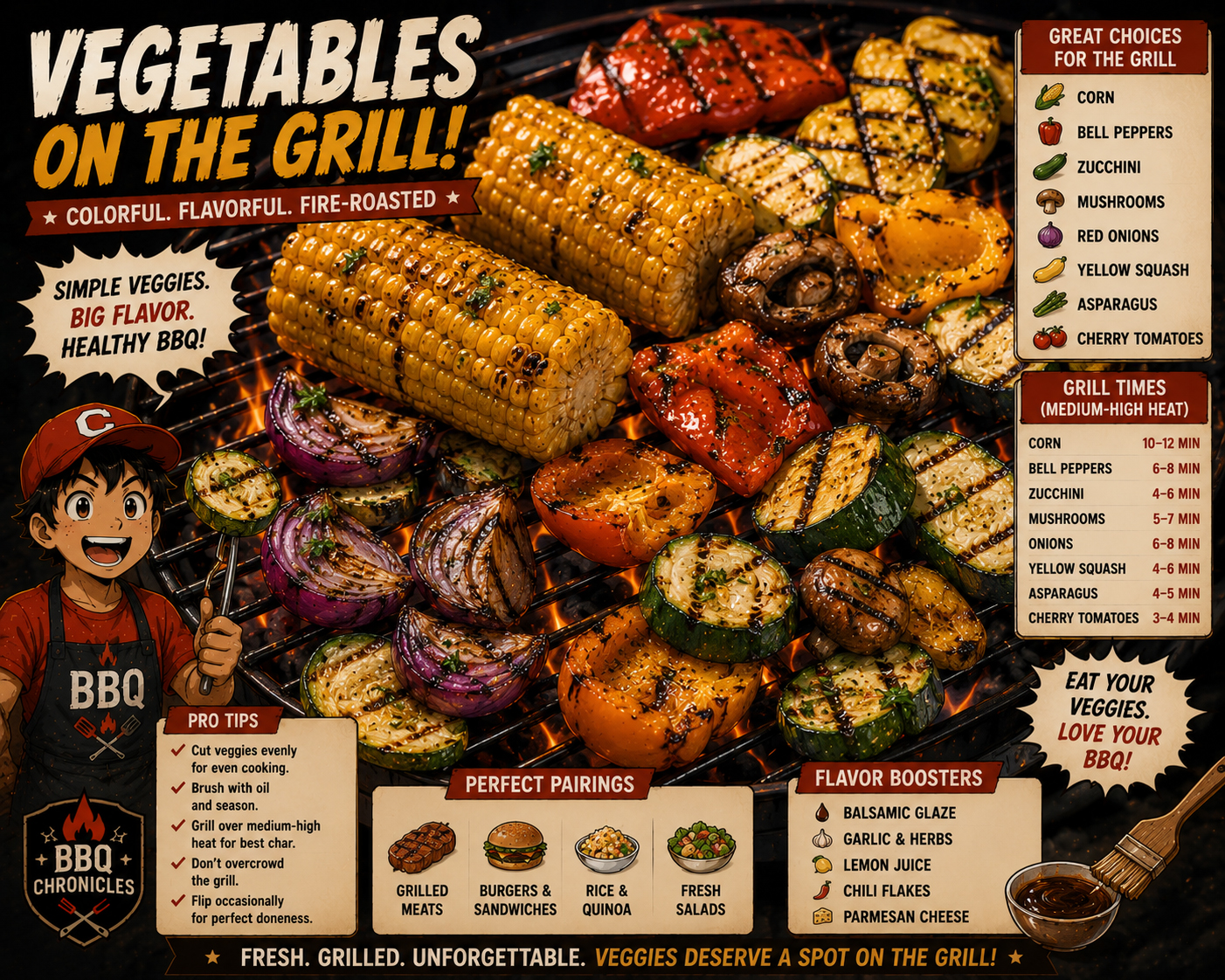
The secret is simple: cut evenly, oil lightly, season well, use the right heat, and pull vegetables before bright becomes burned.
Vegetables can be the easiest win on the barbecue. They cook quickly, take seasoning well, and add color to the plate. The mistake is treating every vegetable the same. Corn is not zucchini. Mushrooms are not onions. Peppers are dramatic but forgiving. Small pieces may need skewers or a grill basket so dinner does not fall through the grates.
1. Cut for the grill
Cut vegetables large enough that they will not fall through the grates. Slices, halves, planks, skewers, foil packets, or grill baskets can all work depending on the vegetable.
2. Oil lightly
A little oil helps seasoning stick and encourages browning. Too much oil can drip, smoke, and feed flare-ups. Light coating beats a shiny flood.
3. Season before cooking
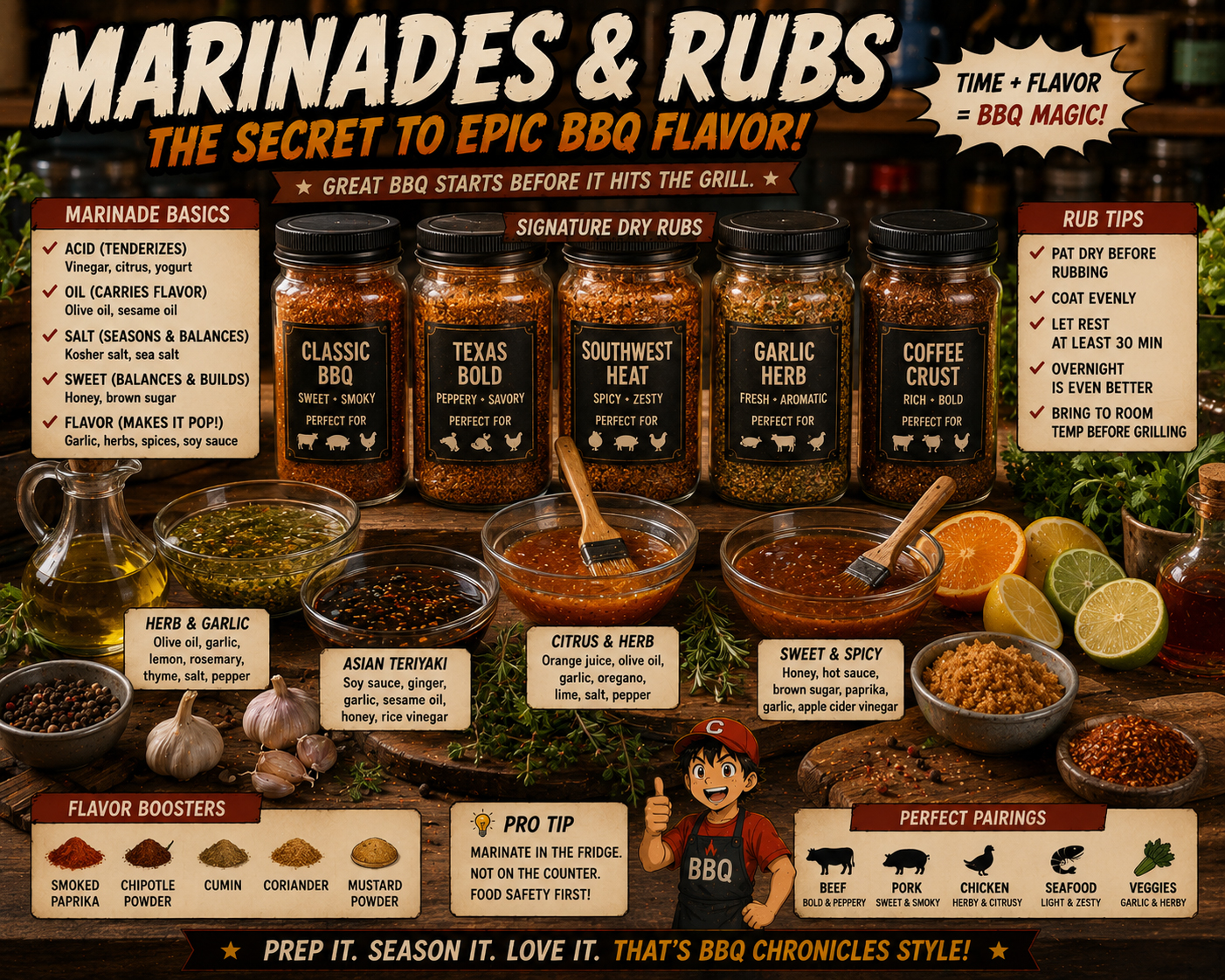
Salt, pepper, herbs, garlic, citrus, chili, and simple spice blends can all work. Keep seasoning bold enough to survive the grill.
4. Use medium to medium-high heat
Most vegetables want enough heat to char but not so much that the outside burns before the inside softens. Keep a cooler zone available.
5. Turn with care
Use tongs or a spatula and turn vegetables before they cross from char into carbon. Zucchini and peppers can cook fast, so stay near the grill.
6. Finish with brightness
After grilling, a squeeze of lemon, a splash of vinegar, fresh herbs, or a little sauce can wake everything up. Vegetables like a final note.
7. Keep them warm, not trapped
If vegetables sit covered too tightly, they may steam and soften more than planned. Serve soon or hold loosely so texture survives.
8. Make enough
Grilled vegetables disappear faster than expected. Someone who “only wanted a burger” will suddenly want three pieces of corn and all the peppers.