Marinades soak. Rubs cling. Both need a plan.
Marinades are wet flavor systems. Rubs are dry flavor systems. The best choice depends on the food, the time available, and the grill result you want.
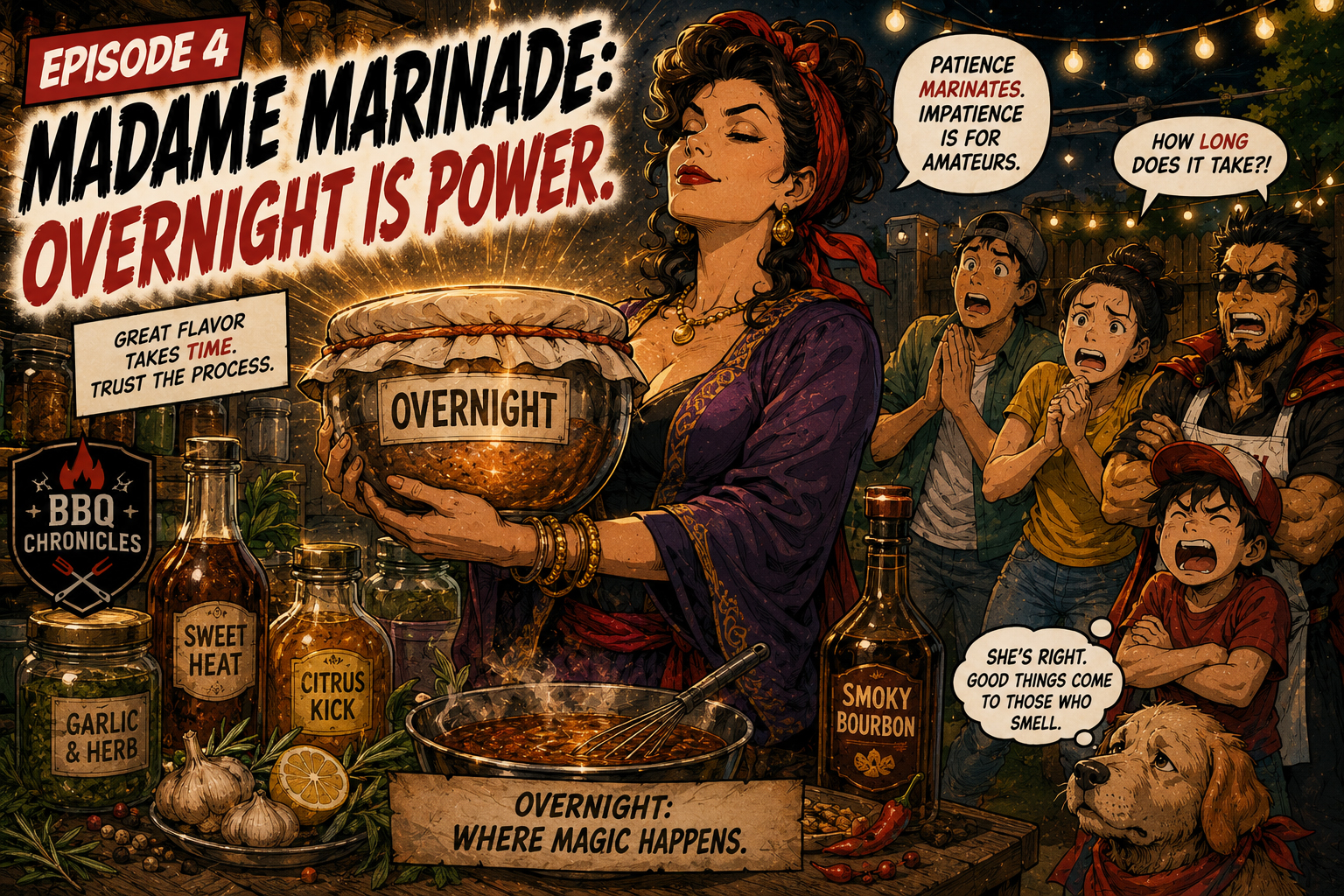
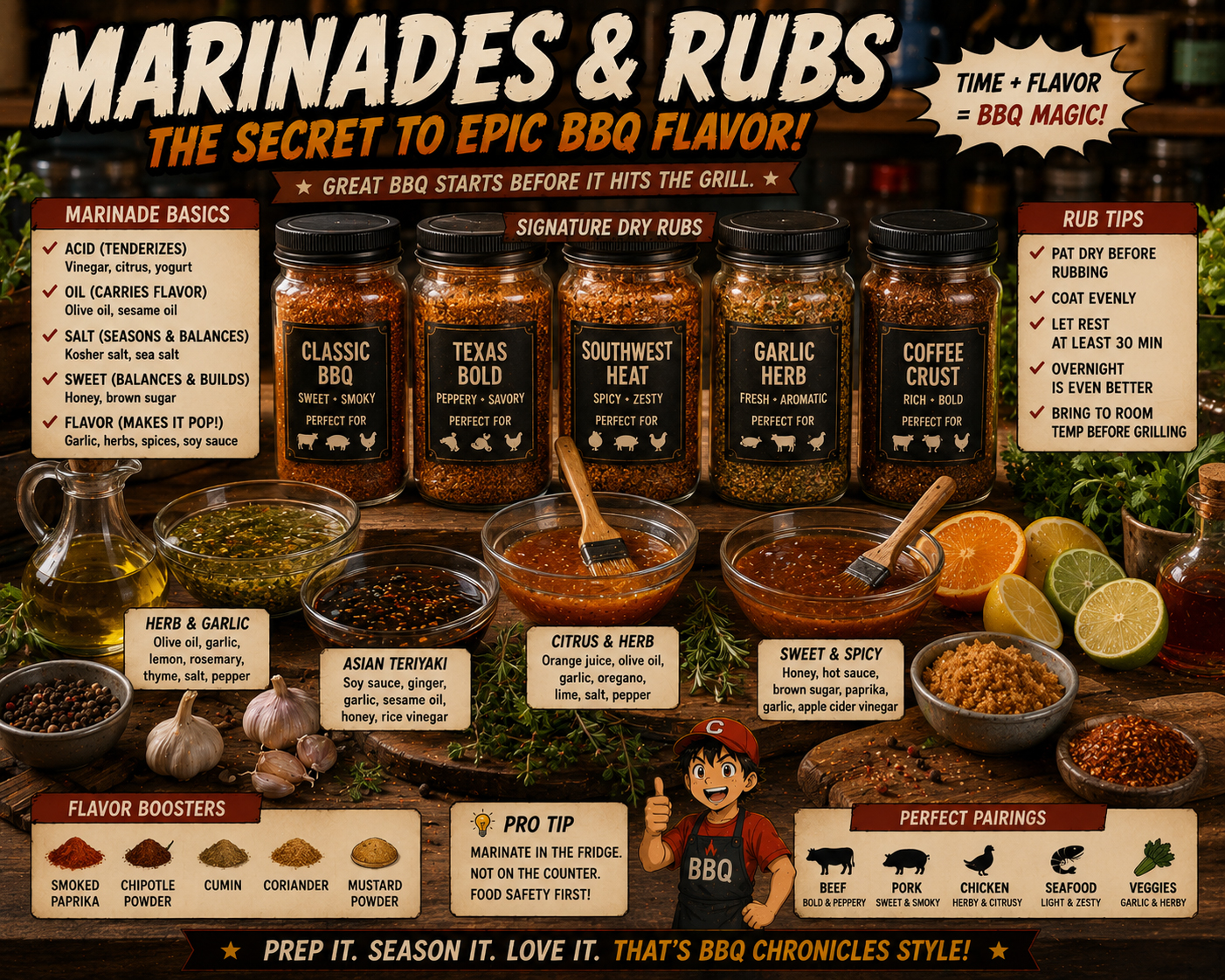
A marinade can bring moisture-friendly flavor, acidity, herbs, garlic, citrus, soy, spices, and aromatics. A rub can build a seasoned crust, help browning, and keep prep simple. The mistake is treating both like magic. Madame Marinade knows the truth: flavor works best when timing, salt, heat, and safety are all respected.
1. Know what a marinade does
A marinade adds surface flavor and can influence texture depending on ingredients and time. Acid, salt, oil, sugar, herbs, and spices each play a role. Too much acid for too long can make some foods unpleasant.
2. Know what a rub does
A rub seasons the surface and can help create a flavorful crust. Dry rubs are especially useful for steak, ribs, chicken, vegetables, and anything that wants a bold outside without extra liquid.
3. Salt matters
Salt is one of the most important flavor tools. It helps seasoning taste complete and can improve the surface before grilling. Use it deliberately, not randomly.
4. Sugar needs caution
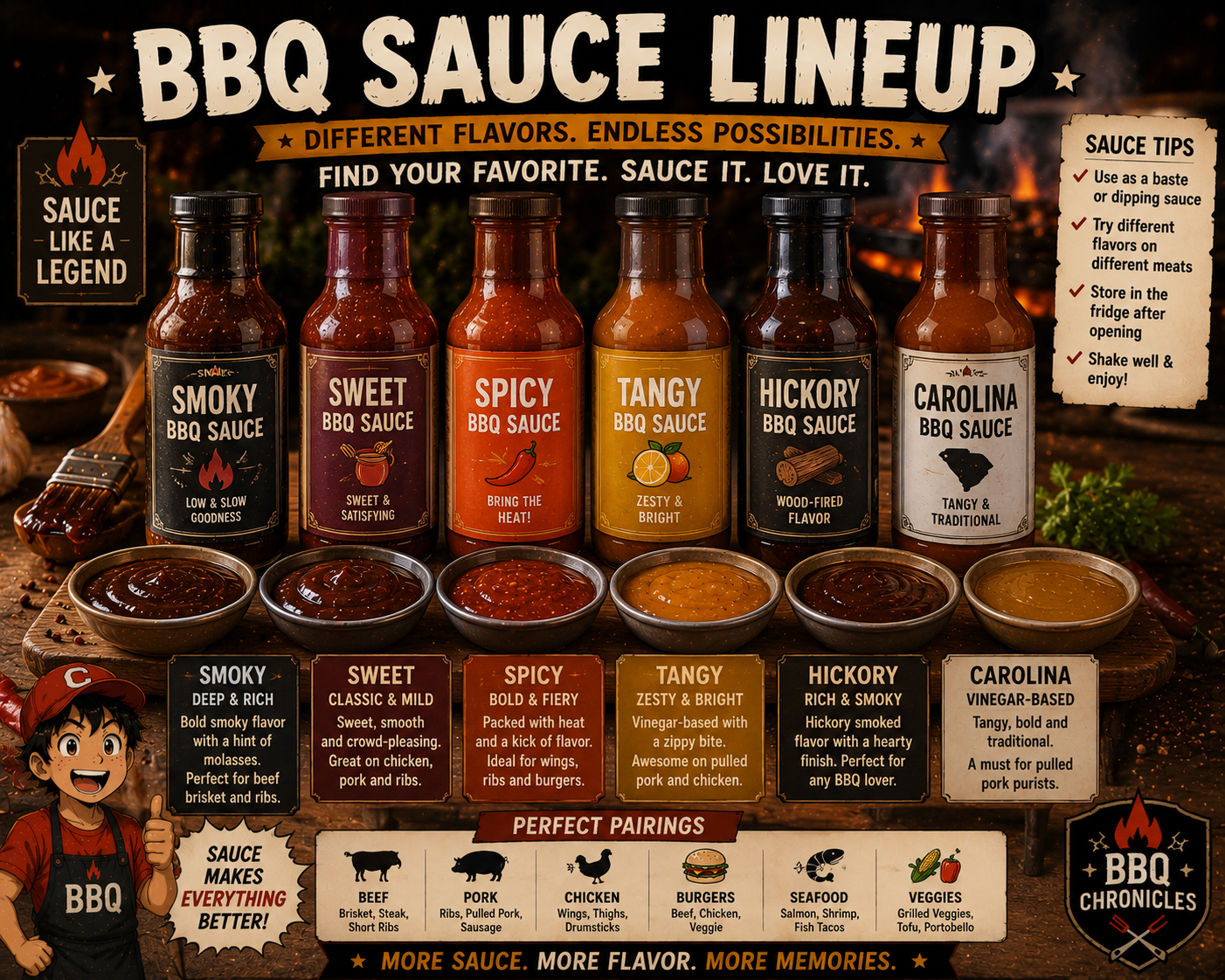
Sugar can help browning and sweetness, but it can burn over high heat. Use sweet rubs and sauces carefully, especially near direct flame.
5. Set sauce aside before raw contact
If you want marinade or sauce for serving, reserve a clean portion before it touches raw meat. Do not brush raw-contact marinade onto finished food unless it has been handled and cooked safely.
6. Refrigerate while marinating
Marinating belongs in the refrigerator, not on a warm backyard table. Keep raw foods cold until grilling time.
7. Pat dry when needed
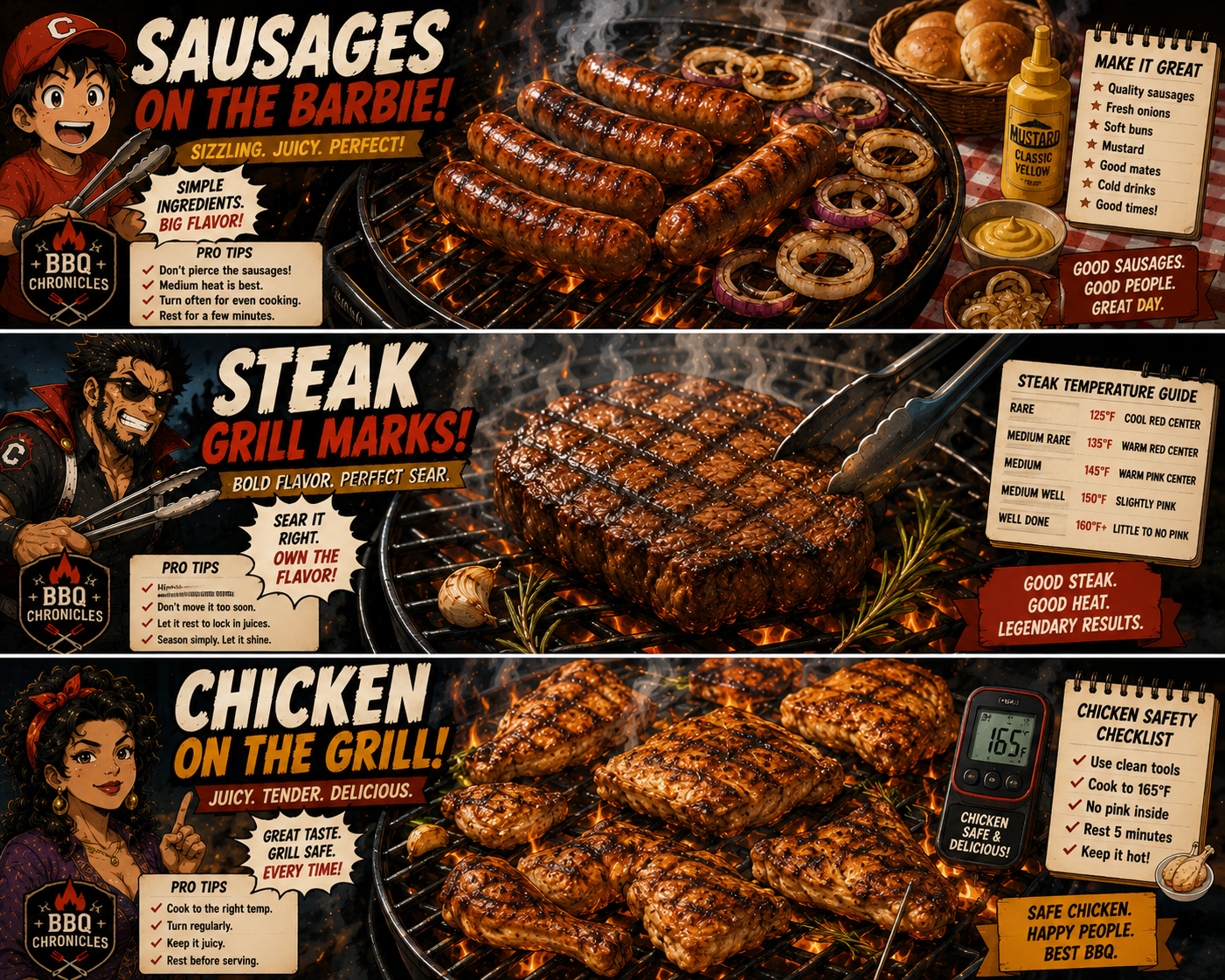
Wet surfaces can steam instead of sear. For many grilled foods, patting excess marinade from the surface helps browning and reduces flare-up risk.
8. Match flavor to heat
High-heat grilling favors simpler seasoning and less sugar. Lower, slower cooking can handle deeper rubs, sauces, and glazes with more control.